
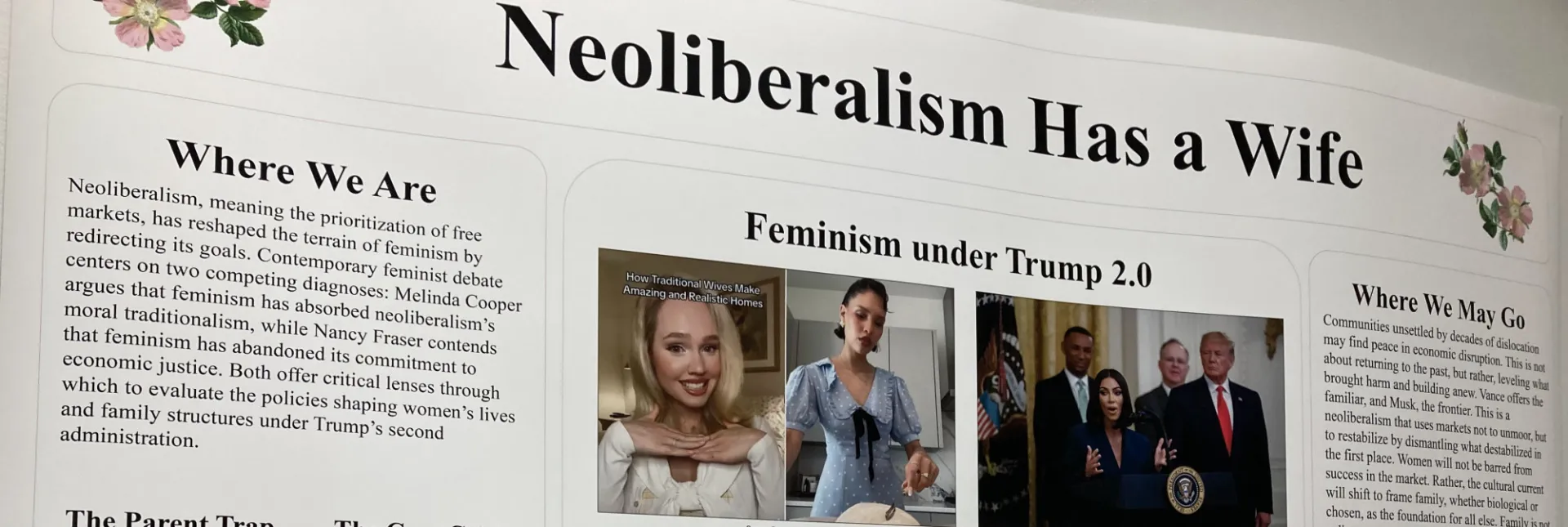
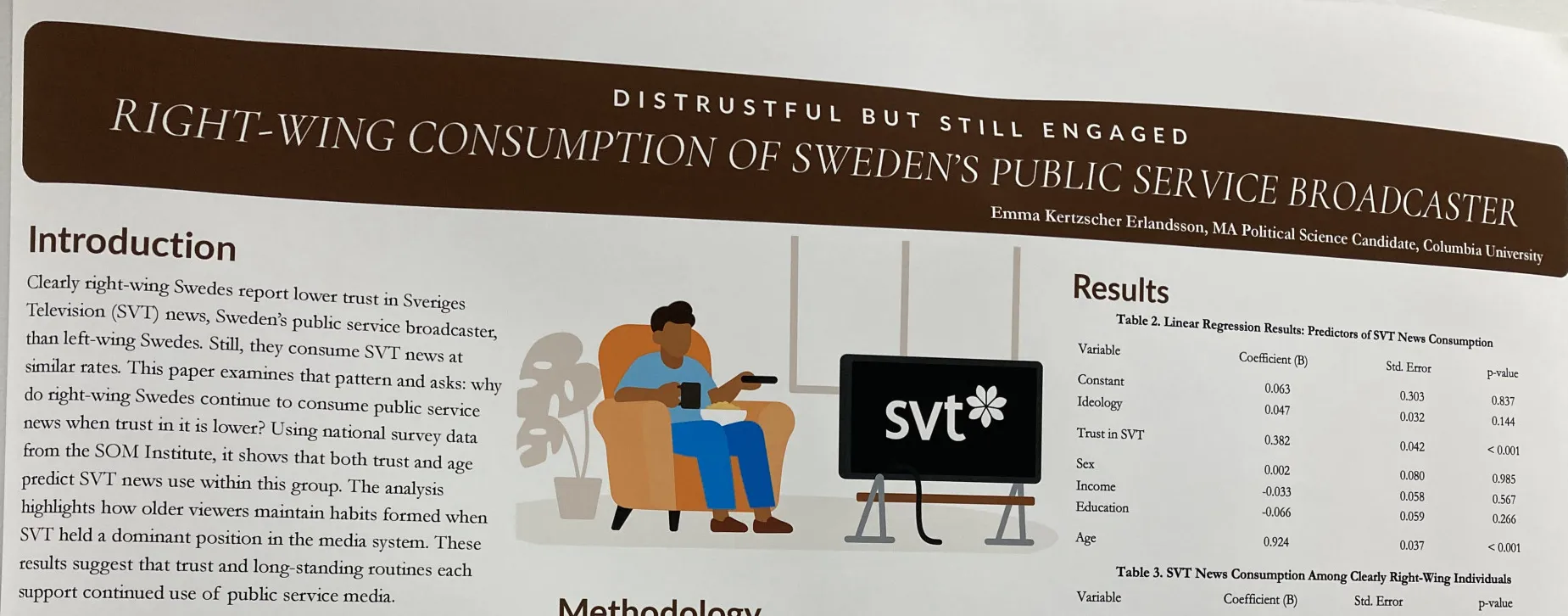
Capstone Project
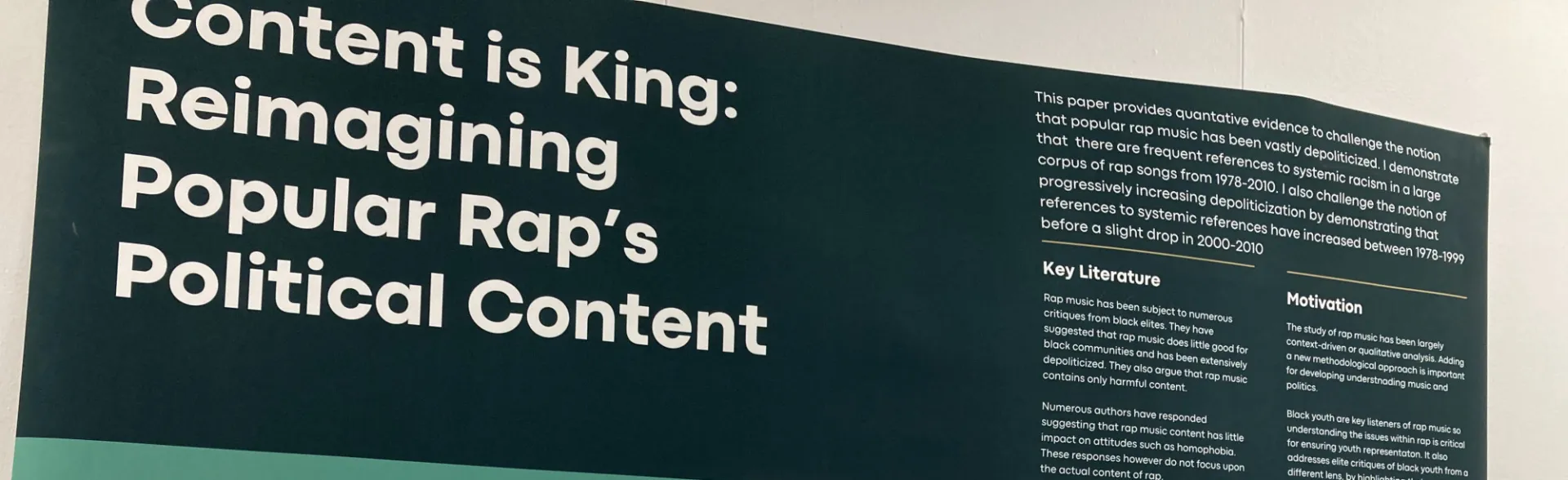
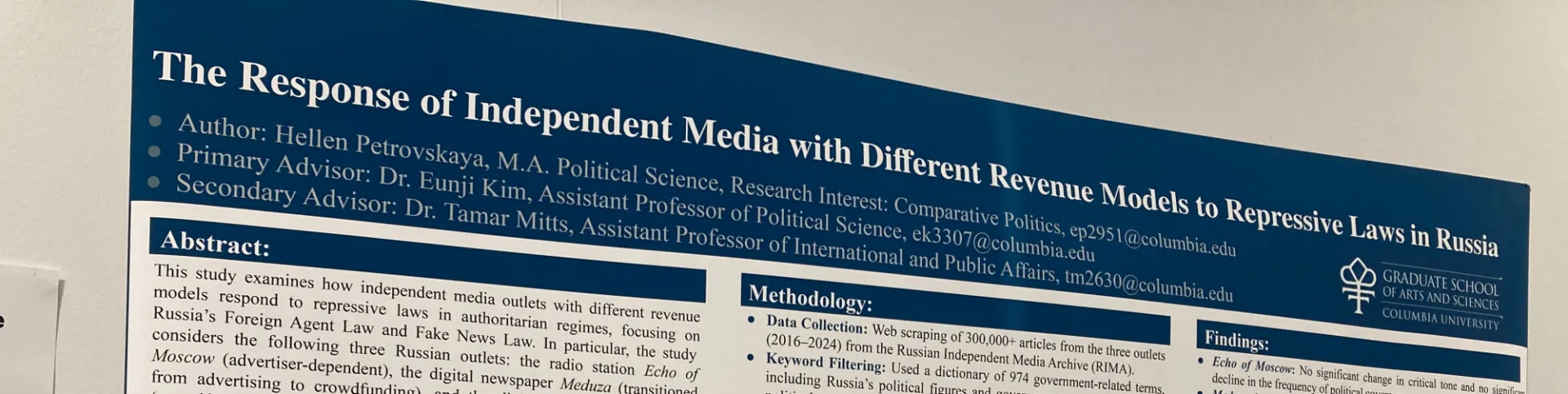
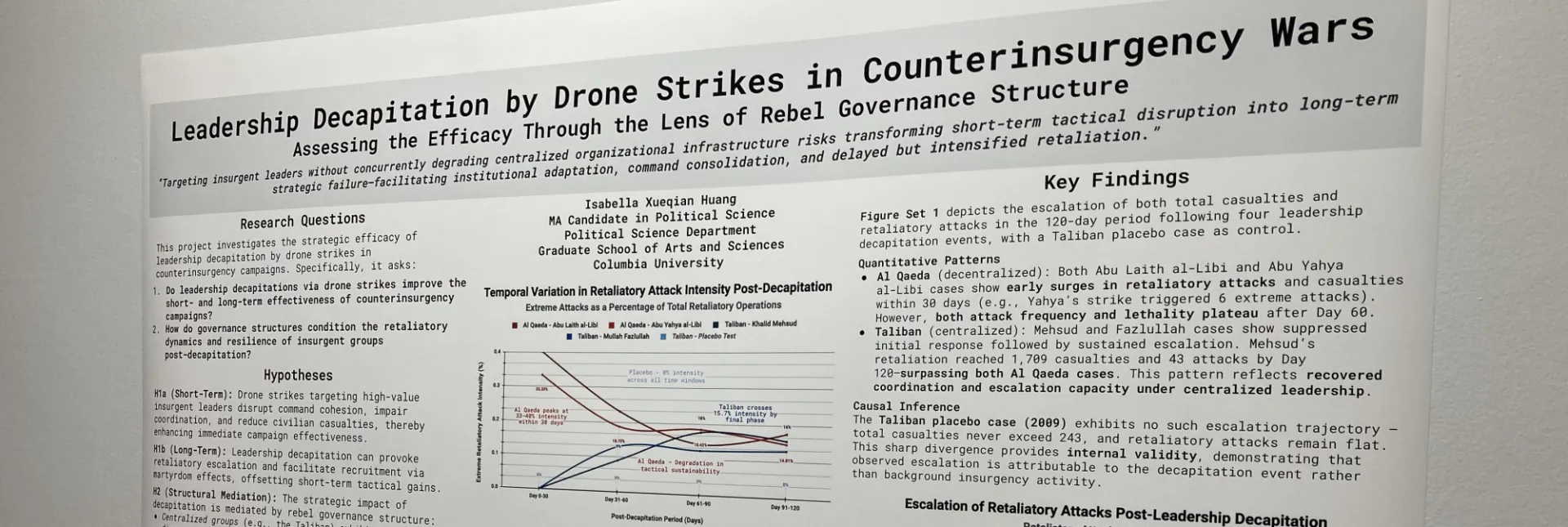
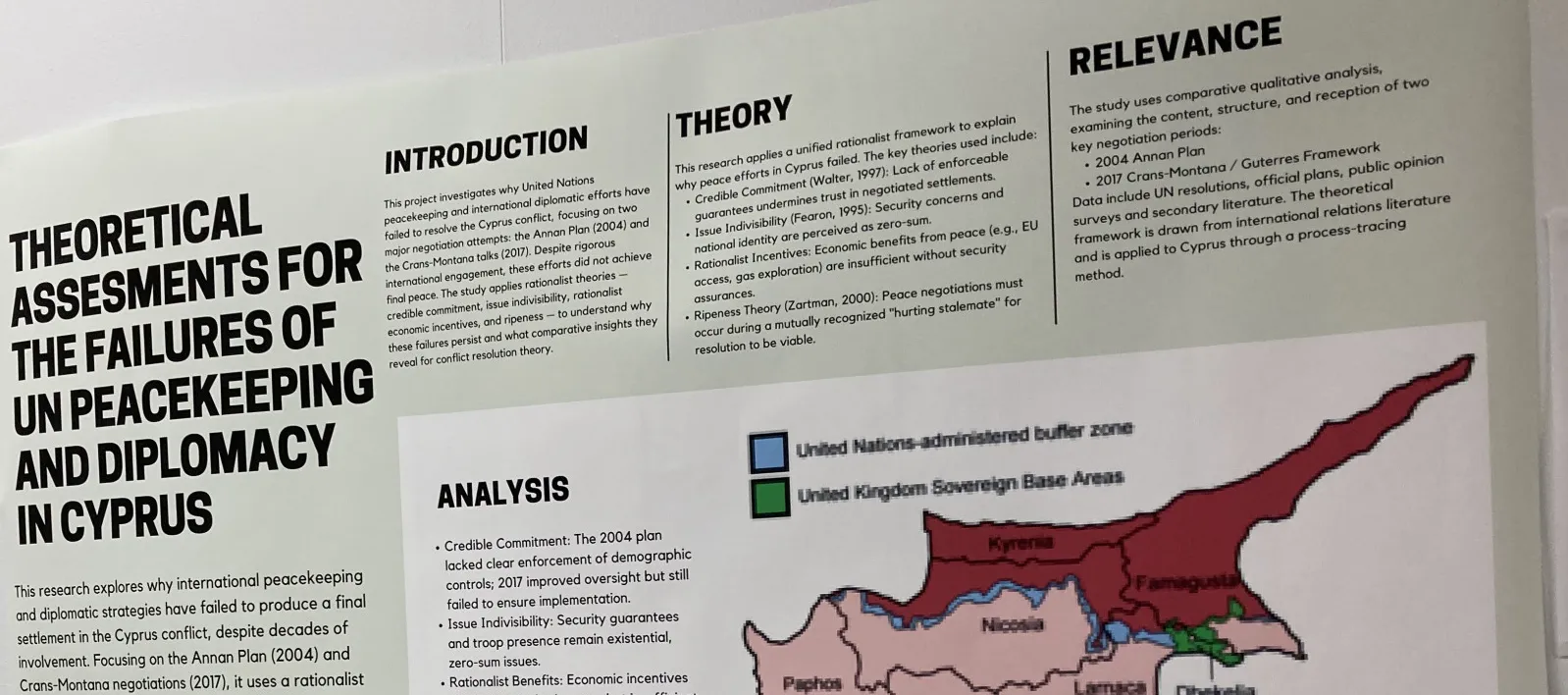
The capstone paper is a research paper or proposal, which has been polished through a thorough process of comments and revisions over the entire year of the MA course. The process resembles that of a journal submission with peer review. This will familiarize students with advanced scholarly work and give them the opportunity to showcase the skills acquired during the year. The original paper will be written in the Fall term as part of a regular seminar (around 75% of effort) with revisions and improvements implemented between January and April (around 25% of effort). There will be a poster presentation at the end of the academic year.
The paper should be a minimum of 5,000 words for a research design and 6,000 words for a full research paper (excluding references). It should follow the formatting guidelines of *The Chicago Manual of Style* (16th edition) or equivalent.
Capstone paper instructions for students
In the fall:
1. Pick a Fall course where you are writing a final paper.
2. Inform your professor (who will become the first reader of the capstone) and the
Capstone coordinator that you would like to use this for the capstone.
3. Complete all course requirements as instructed by the professor.
4. Discuss your use of data (if doing full research) with your professor. You may need to submit an IRB protocol and/or contact the Columbia IRB office directly.
5. Use your professor’s comments to review the paper over the winter break.
In the spring:
1. Register for the Independent study with the capstone coordinator (1 credit)
2. Your project will have been assigned to the Capstone coordinator or a teaching assistant depending on your field of study. Meet with the capstone coordinator or the teaching assistant before February 15.
3. You will either receive comments directly from the capstone coordinator/teaching
assistant or you will be assigned a second reader.
4. If you are assigned a second reader, meet with them by March 15.
5. Submit a short report of your progress to the capstone coordinator by April 1. This
should detail the comments you received from your first and second readers, your responses to those comments and explain the work you have done and will do to
address the comments in your final project submission.
6. Incorporate the comments you received over the Fall and Spring terms and submit your final paper to the first reader by April 15.
7. Prepare a poster summarizing your project and submit it by May 3 for printing (a
workshop on how to make a poster will be held in April.)
Frequently Asked Questions
Q. What is a Capstone paper?
Research paper or proposal
A substantial academic paper that is revised and refined through multiple rounds of feedback.
Fall semester work
The paper is typically developed during a fall seminar (about 75% of the effort) and completed by April, with further revisions made between January and April.
Demonstration of skills
An opportunity to apply and showcase the knowledge and research skills acquired throughout the academic year.
Poster presentation
The final project is presented in poster format during the end-of-year reception.
Q. What courses can be used for Capstone?
The Capstone paper can be started within any of the 8000-9000 courses in political science, including cross-listed courses, or in political science 4000 courses that have been petitioned and approved to be used as a colloquium 8000-9000.
Q. Can the Capstone start in a non-political science class?
A. It is possible to use a grad-level course from related discipline, but it will have to be discussed with the Capstone coordinator, and the final product will have to be in line with political science expectations.
Q. Can an adjunct professor or visiting professor be my first or second reader?
A. Yes, they can and they should get in touch with the Capstone coordinator to discuss the additional compensation.
Q. Is it possible for a fall course being used to fulfill the capstone requirement to carry an incomplete grade?
A. Yes, but the agreed deadline cannot pass the end of January.
Q. Can I change my choice of capstone paper?
A: The fall Capstone course may be changed in January, but only if the paper for the originally selected course received less than an A– and the new faculty member agrees to supervise the Capstone.
Q. Can an Independent Study done in the fall be used for the Capstone?
A. Yes.
Q. What if I am a part-time student?
Part-time students may choose to either submit or present their poster with the cohort they entered with or submit their paper and poster one month before their graduation date.
Note: Poster printing is not available in the latter case
Q. What if I do not submit the poster on time for the printing deadline for the end-of-the-year exhibition/celebration?
A. If you do not submit on time for the party, the poster may not be printed and will not be shown. Please remember that to pass the independent study connected to the Capstone project you will have to submit a PDF version of your poster to the Capstone coordinator by the deadline established for the end of the course
Q. How is the Capstone project overall evaluated?
A.
1. Paper: The first reader (faculty instructor teaching the course chosen for the capstone in the fall) will be responsible for evaluating the final product submitted in late April.
In late April, the faculty will be filling in a form where they select whether the latest version of the Capstone paper meets fully the expectations for a Capstone (PASS+), or could use some improvement but meets expectations (PASS). If the paper is considered not to meet the expectations, it could receive a FAIL. The faculty can also propose that the paper receive a grade of DISTINCTION.
This evaluation will be based on several criteria, including the quality of the research question, writing proficiency, theory or hypotheses development, literature review, and research design.
2. Poster: The Capstone coordinator will evaluate each poster on a P/F basis.
Note: Separately, a “Best Poster” prize will be awarded to the poster that receives the most votes during the end-of-year reception.
3. The Independent Study will be graded by the Capstone coordinator as P/F and will combine: the paper, the poster, the second-reader brief, and attendance to mandatory meetings.
Q. What about the grades of DISTINCTION and FAIL?
A. DISTINCTION will be discussed in early May, and only 3-4 papers will be given this grade. Students will be informed in mid-May.
A FAIL grade will be discussed by the same committee, together with the evaluations of the other assignments: the brief and poster. Students will be informed only after the committee has met. Students who are given a FAIL grade on the paper will be allowed to get an INCOMPLETE in the independent study connected to the capstone to work on the paper during the Summer. They will then submit a new version for evaluation to the committee before September 1st.
Q. How does the FINAL POSTER SESSION work?
A. A workshop on creating posters for effective presentations will be offered during the Spring semester (the department will cover the costs of the printing).
Regardless of the grade, all papers will be transformed by the students into posters.
The posters will be presented to the department during an end-of-year reception with food and drinks.
A small prize will be awarded for the best M.A. Capstone poster, as voted on by students and faculty attending the event.
Note: The M.A. Capstone posters may also be featured on our website after the reception.